Solar Panel Lifespan: How Long Do Solar Panels Last?
Most panels last 25 to 30 years and still produce most of their original output after decades. Here's what affects lifespan and how to make yours last.
Quick answer
Residential solar panels are designed to last 25 to 30 years, and some last up to 40. They lose about 0.5% of their output per year on average, so after 25 years most panels still produce roughly 82.5% to 93% of their original output. Panel quality, climate, and installation have the biggest effect on lifespan.
How long do solar panels last?
Manufacturers design residential solar panels to last 25 to 30 years, and some last up to 40. Panels gradually lose efficiency over time, typically around 0.5% per year according to the Solar Energy Industries Association (SEIA). After 25 years, most panels still operate at about 85% of their original capacity. This decline is called the degradation rate, and it depends on weather, panel quality, and installation.
Do solar panels degrade over time?
Yes, slightly. According to the National Renewable Energy Laboratory (NREL), panels degrade by between 0.25% and 0.75% each year, for an average of about 0.5% a year. After a 25-year warranty period, you can still expect them to perform at roughly 82.5% to 93% of their original output.
What affects solar panel life expectancy?
Panel quality
Better materials last longer. The main cause of long-term performance loss is potential induced degradation (PID): a voltage difference between components like the cells and the glass causes leakage currents that gradually reduce output. Some manufacturers use PID-resistant glass, encapsulation, and diffusion barriers to prevent it. A solar professional can help you choose panels built to resist it.
Weather
Climate affects panels the same way it affects your roof. High humidity, heat, and weather stress are the main drivers of PID. In a process called thermal cycling, materials expand in heat and contract in cold, which can slowly create micro-cracks. High winds can add stress too. Besides choosing quality panels, the best protection is expert installation.
Installation
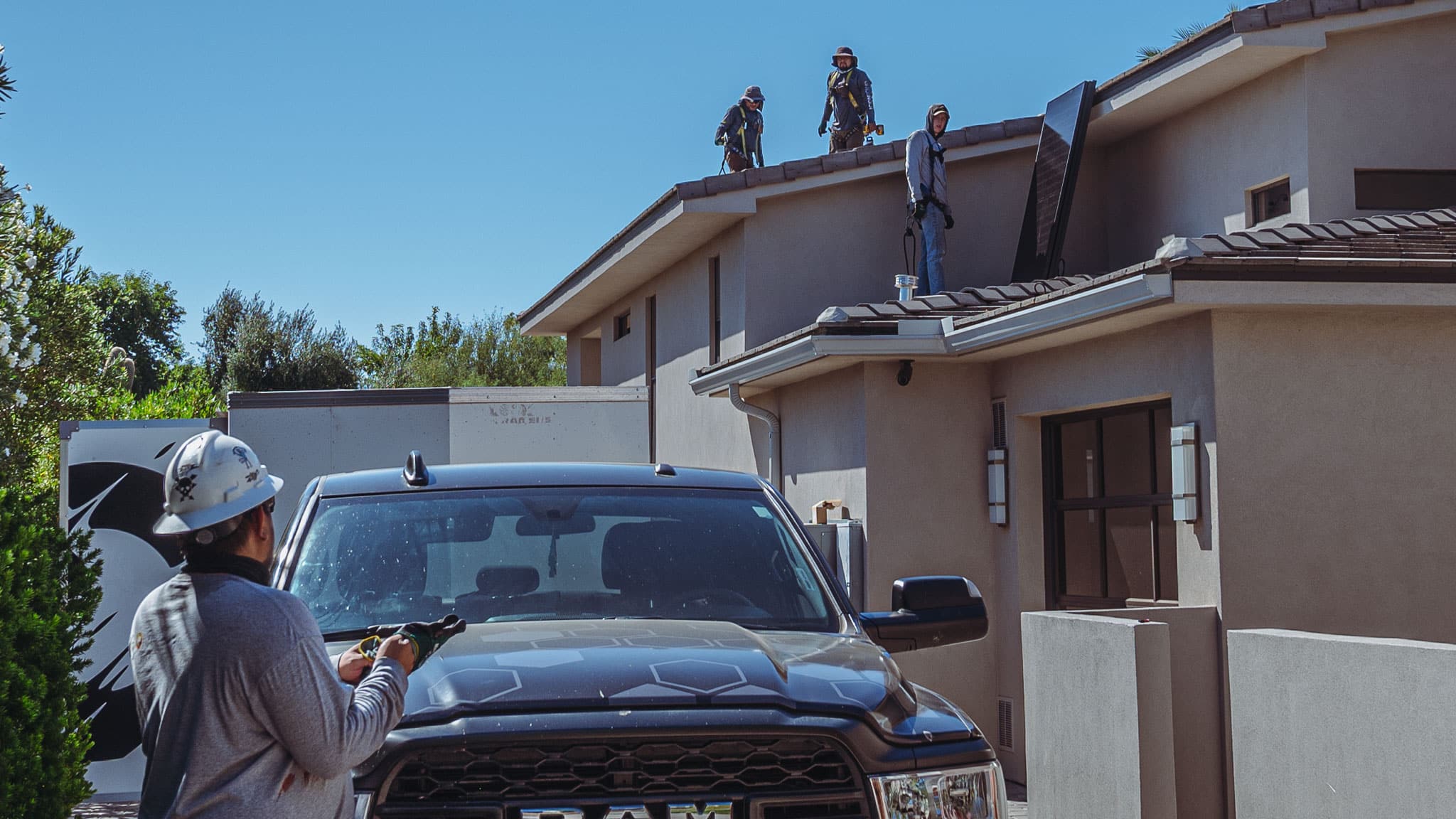
An experienced crew designs the install for your roof and local conditions. In high-wind areas, racking must resist uplift. In extreme heat, panels should sit a few inches above the roof so air can flow underneath and cool them. Where snow piles up, the tilt should let it slide off while keeping a good angle for production.
Maintenance
Most of the work that protects panel lifespan happens up front: good panels and a good installer. Panels have no moving parts and need little to no maintenance unless something blocks the sun. If a heavy dust storm coats your panels, consider a professional cleaning rather than scrubbing them yourself, which can scratch the surface. See our support center for monitoring and troubleshooting guides.
When should I replace my solar panels?
Monitor your system's performance over time; today that's done with an app on your phone. Near the end of your panel warranty (typically about 25 years), compare your panels' output to what newer technology offers and weigh the trade-offs of replacing them. By then, most systems have long since paid for themselves.
How do you make solar panels last longer?
- Choose high-quality panels that use PID-resistant technology.
- Choose a local installer with experience in your climate. A system that's right for Flagstaff, AZ is different from one that's right for Houston, Las Vegas, or Phoenix.
- Monitor production so you catch problems early.
Icon Power specializes in the Southwest, and offers 25-year performance, panel, and microinverter warranties, plus the Icon Power App where you can monitor your system, contact support, and refer friends and family for cash rewards. Get a free, no-obligation solar estimate →
Frequently asked questions
Do solar panels need regular maintenance?
Very little. Panels have no moving parts. Servicing is needed only in the rare case that something blocks sunlight or a component fails. Panel failure rates are very low, and most panels carry 25-year warranties.
Can poor installation shorten solar panel lifespan?
Yes. Improper installation can speed up degradation. Experienced installers follow best practices for your region to limit climate-related damage.
Why do solar panels degrade?
Degradation is normal. The leading technical cause is potential induced degradation (PID), which climate stress and poor installation or panel quality make worse. A high-quality panel installed properly can keep about 93% of its output after 25 years.
What is the average lifespan of solar panels?
Most panels last 25 to 30 years and keep about 82.5% to 93% of their capacity after 25 years. An NREL study found a median failure rate of 5 panels out of 10,000 per year between 2000 and 2015.
When should I plan to replace solar panels?
Monitor performance over time. Output declines about 0.5% a year on average, so most homeowners evaluate replacement near the end of the 25-year warranty, based on how the panels are performing and what newer technology offers.
Video transcript
See what solar can do for your home
Get a free, no-obligation estimate designed around your roof, your bills, and your utility's rate plan.