Is Solar Worth It in Arizona in 2026?
Arizona has the sun and the summer bills to make solar work. Here's what changed in 2026, which state incentives still apply, and how to tell if solar pays off for your home.
Quick answer
For most Arizona homes, yes. Arizona gets more than 300 sunny days a year, summer bills are high, and state incentives still apply, including a 25% state tax credit up to $1,000 and sales and property tax exemptions. The federal homeowner credit ended after 2025, so purchase paybacks are longer than before and the financing structure you choose matters more.
Does Arizona get enough sun for solar?
Yes. With more than 300 sunny days a year, Arizona is one of the sunniest states in the country, and it ranks among the top five states for solar generation. Solar supplied about 17% of Arizona's total net electricity generation in 2023. The dry climate and clear skies also mean few weather-related interruptions to production.
That kind of sunlight lets a well-designed rooftop system cover a large share of a typical household's electricity, which is what makes Arizona one of the best places in the country to go solar. The real question is whether solar pays off for your home.
How do you know if solar is worth it for your Arizona home?
Your electricity use
Start with how much electricity your household uses. Air conditioning through Arizona's long summers drives bills up, and solar offsets that cost with power from your own roof. Homes with higher usage generally see the most benefit. Pull 12 months of bills so you can see your summer peak, not just the average.
Your roof's sun exposure
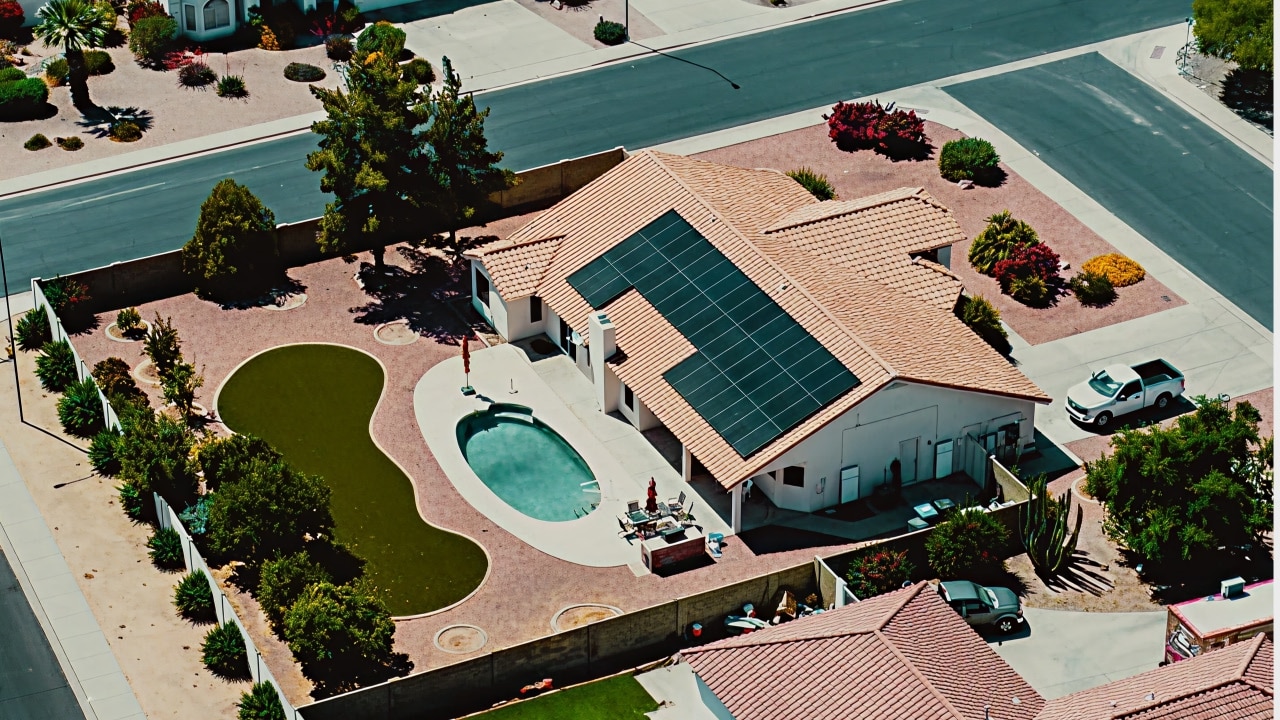
Orientation, pitch, and shading all affect production. South- and west-facing roofs with little or no shade get the best sunlight through the day. Even in Arizona, a roof with heavy shading or a poor orientation can change the math, so a site assessment comes first.
Your payback period
The payback period is how long a system takes to pay for itself through savings. Before the federal homeowner credit ended, Arizona homeowners typically paid off a purchased system in about 8 to 14 years. Without that credit, purchase paybacks run longer, which is why financing structure matters more now (see below).
What solar incentives are available in Arizona in 2026?
The biggest change first: the 30% federal homeowner solar credit expired on December 31, 2025. If you buy a system with cash or a loan in 2026, there's no federal credit. The One Big Beautiful Bill Act, signed July 2025, ended it outright, years ahead of its original schedule. Any article telling you otherwise is out of date.
Federal credit value still exists for third-party owned systems (leases and PPAs) under Section 48E. In those arrangements the system's owner claims the tax credits and passes the value to you through a lower monthly payment or rate. If federal credit value matters to your decision, third-party ownership is currently the only route to it. Learn more in our federal tax credit guide.
Arizona's state incentives are untouched:
- Arizona Residential Solar Tax Credit: 25% of system cost, capped at $1,000, against your state income tax.
- Solar Equipment Sales Tax Exemption: no state sales tax on solar equipment.
- Energy Equipment Property Tax Exemption: the value solar adds to your home doesn't raise your property assessment.
Utility programs add more. Arizona utilities use net billing, crediting you for excess power you send to the grid, though rates vary sharply between APS, SRP, and TEP. APS also runs a Virtual Power Plant program worth roughly $150–$500 a year for battery owners.
General information, not tax advice. Consult a tax professional about your situation.
How does net billing work in Arizona?
Arizona does not have retail-rate net metering, where exported power is credited at the same price you pay. It uses net billing, which credits exports at a lower rate. As of 2023, the Resource Comparison Proxy (RCP) export rate was 7.6¢ per kWh against an average retail rate of 15.1¢. The Arizona Corporation Commission limits annual reductions in the export rate to 10% and locks a customer's export rate for 10 years.
Because exports are worth less than retail power, systems in Arizona should be sized and designed to use as much of their own production as possible, and a battery often adds real value. See how APS and SRP rate plans affect solar.
What are the benefits of solar panels in Arizona?
Lower electricity bills
The most visible benefit is a lower bill. An average Arizona resident spends about $260 a month on electricity, and utility rates keep rising. Solar lets you generate your own power and reduce how much you buy from the grid.
Higher home value
Energy-efficient homes are attractive to buyers. Studies have found that homes with solar sell for about 4.1% more on average. Arizona's property tax exemption means that added value doesn't raise your assessment.
Clean, renewable energy
Every kilowatt-hour your roof produces is one that doesn't need to come from fossil fuels, which lowers your household's carbon footprint.
How much does solar cost in Arizona?
Cost depends on system size and your home. As of August 2024, the average installed cost in Arizona was about $2.23 per watt, putting a 5 kW system between roughly $9,472 and $12,814 before incentives. Icon Power offers $0-down options so you can start without a large upfront payment. See financing options.
So, is solar worth it in Arizona without the federal credit?
For many homes, yes, but it depends more than it used to. What hasn't changed: Arizona sun is reliable, summer bills are brutal, and utility rates only move one direction. What has changed is that the financing structure you choose now matters more than it did when everyone got 30% back regardless.
Icon Power designs every system for your roof, your usage, and your utility's rate plan, with ongoing monitoring and support for the life of the system. See solar in Arizona →
Frequently asked questions
Is solar a good investment in Arizona?
For most homes, yes. Abundant sunlight, high summer bills, state incentives, and rising utility rates make solar a strong fit in Arizona, though purchase paybacks are longer now that the federal homeowner credit has ended.
Does solar increase home value in Arizona?
Yes. Studies have found homes with solar sell for about 4.1% more, and Arizona exempts the added value from property tax.
What is the average cost of solar panels in Arizona?
As of August 2024, about $2.23 per watt installed, or roughly $9,472 to $12,814 for a 5 kW system before incentives. Your price depends on your home and system size.
How long do solar panels last in Arizona?
Typically 25 years or more. Read more in how long solar panels last.
Is there still a federal solar tax credit in Arizona?
Not for homeowners who buy a system. The homeowner credit ended December 31, 2025. Third-party owned systems can still pass federal credit value through to you under Section 48E.
Video transcript
See what solar can do for your home
Get a free, no-obligation estimate designed around your roof, your bills, and your utility's rate plan.