Is Solar Worth It in Nevada in 2026?
Nevada has abundant sun and one of the best solar export credits in the Southwest. Here's what solar costs, which incentives still apply in 2026, and how to tell if it's worth it for your home.
Quick answer
For most Nevada homeowners, yes. Nevada is one of the sunniest states in the country, and NV Energy and Valley Electric Association credit excess solar at 75% of the retail rate, much better than neighboring states. The federal homeowner credit ended after 2025, but third-party owned systems can still pass federal credit value to you, and Nevada has no state income tax to offset.
Are solar panels worth it in Nevada?
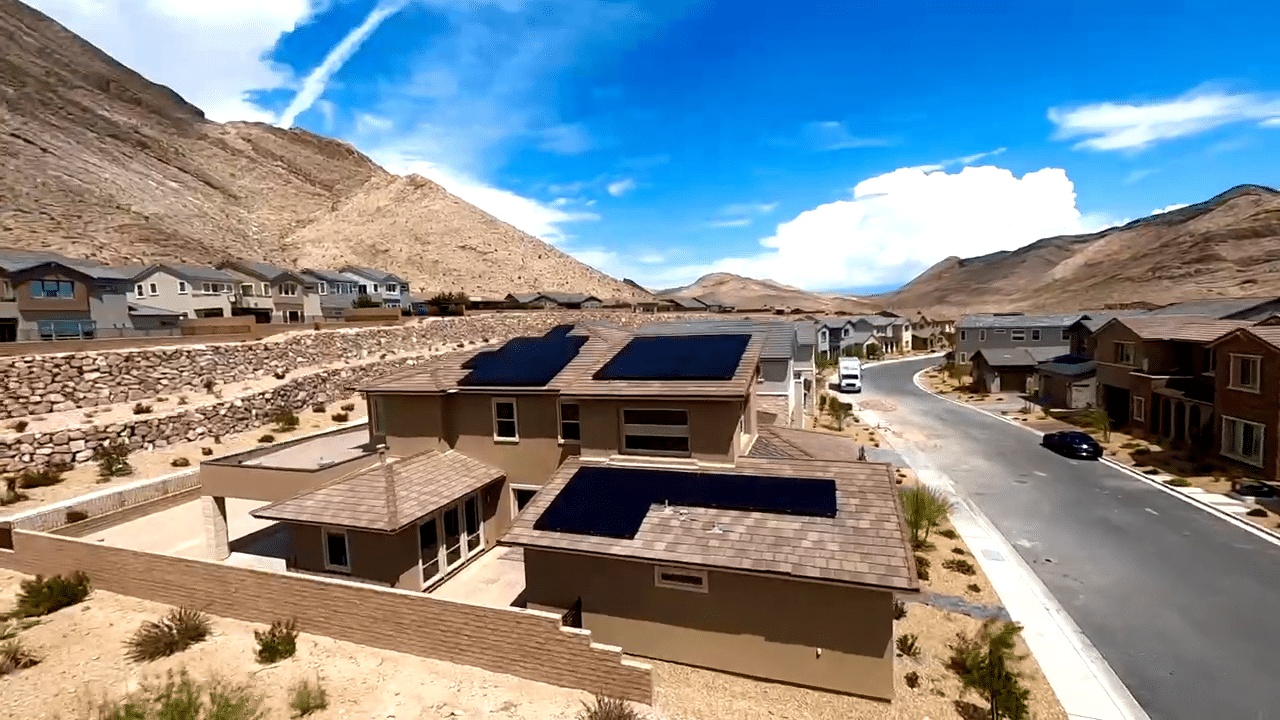
Yes, for most homeowners. From Las Vegas to Lake Tahoe, Nevada has abundant sunshine, strong net metering rules, and solar access protections. Together those deliver lower electricity bills and higher home resale value. Nevada ranks third among U.S. states for the most sunlight, behind only New Mexico and Arizona.
How much do solar panels cost in Nevada?
The price depends on your home and savings goals. As of 2023, Nevada homeowners paid about $2.50–$3.00 per watt installed, slightly below the national average of roughly $3.00–$5.00 per watt. A typical home system ran about $15,000 to $25,000 before incentives. Once a purchased system is paid off, your home essentially becomes its own power plant. See financing options for $0-down choices.
What solar incentives are available in Nevada in 2026?
Federal: the homeowner solar credit (Residential Clean Energy Credit) expired December 31, 2025. If you buy a system with cash or a loan in 2026, there's no federal tax credit. The One Big Beautiful Bill Act, signed July 2025, ended it outright with no phase-down.
The 30% credit still exists under Section 48E for third-party owned systems (leases and PPAs). In those arrangements the system's owner claims the credit and passes the value to you as a lower monthly payment. If federal credit value matters to your decision, third-party ownership is currently the only route to it. See our federal tax credit guide.
State: Nevada has no state income tax, so there's no state tax credit to claim. What Nevada offers instead is regulatory: strong net metering rules and solar access protections that make installation more straightforward than in many states.
Utility: this is where Nevada shines. NV Energy and Valley Electric Association credit excess solar at 75% of the retail rate. That's meaningfully better than neighboring states: Arizona credits somewhere between 3¢ and 10¢ per kWh against a higher retail rate, and Texas has no statewide net metering at all. NV Energy also offers battery storage incentives for customers on time-of-use plans, so you can store production for expensive peak hours instead of exporting it.
Portfolio Energy Credits (PECs): Nevada's version of SRECs. You earn credits based on the renewable energy your system generates, and they can be sold to utilities.
Permits: you'll need electrical and building permits so your system meets local safety code. Your installer should handle that paperwork.
General information, not tax advice. Consult a tax professional about your situation.
How does net metering work in Nevada?
Nevada's net metering policy gives you credits for the excess solar power your panels send back to the grid. Those credits offset future electricity bills. NV Energy and Valley Electric Association customers receive 75% of the retail rate for excess production, which keeps the value of every kilowatt-hour your roof produces high even when you aren't home to use it.
What are the benefits of solar in Nevada?
Lower electric bills
A well-designed system can cover most or all of your electricity use, reducing your bill to the utility's minimum service charge.
Higher resale value
Buyers pay a premium for homes with solar because they inherit lower energy costs. A study by the National Bureau of Economic Research found homes with solar sold for about $15,000 more on average, roughly a 4% premium.
Clean energy leadership
In 2022, Nevada ranked sixth in the nation for total electricity generation from utility and small-scale solar combined, and solar provided 23% of the state's total generation. That growth supports a growing number of local solar jobs.
How do you calculate if solar is worth it for your Nevada home?
Look at four things: the cost of the system, the incentives available to you, your electricity usage, and how much sun your roof gets. The easiest way to get real numbers is a free estimate, where we look at your roof, your bills, and your utility plan. See solar in Nevada →
Frequently asked questions
What solar incentives are available in Nevada?
Nevada's main incentives are NV Energy and Valley Electric Association net metering at 75% of the retail rate, battery storage incentives for time-of-use customers, and Portfolio Energy Credits. The federal homeowner credit ended after 2025, but third-party owned systems can still pass federal credit value through to you under Section 48E.
Does going solar save money in Nevada?
Yes. Solar can significantly reduce your electricity bill and save money over the long term, especially with Nevada's strong export credit.
Does solar increase home value in Nevada?
Yes. Homes with solar typically sell for more, with studies showing about a 4% premium.
What is the average cost to install solar panels in Nevada?
As of 2023, about $15,000 to $25,000 before incentives, or roughly $2.50–$3.00 per watt. Your price depends on system size and your home.
Do you need a permit to install solar panels in Nevada?
Yes. Nevada requires electrical and building permits for home solar. Your installer should handle them.
Video transcript
See what solar can do for your home
Get a free, no-obligation estimate designed around your roof, your bills, and your utility's rate plan.