Should You Add a Tesla Powerwall to Your Solar Setup?
Whether a Powerwall makes sense depends on your goal: backup power, grid independence, or the lowest bill. Here's how to decide, how many you need, and what installation costs.
Quick answer
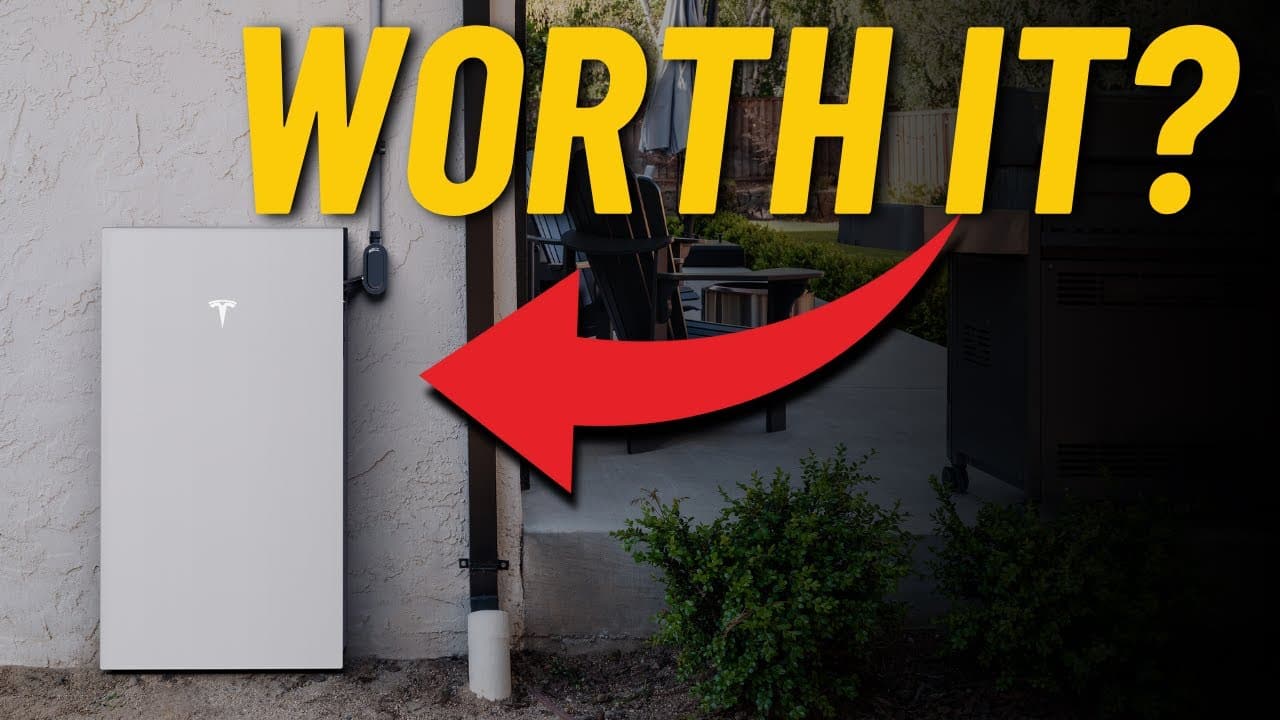
Add a Tesla Powerwall if you want backup power during outages, more independence from the grid, or savings under time-of-use plans and reduced buyback rates. A single Powerwall 3 stores 13.5 kWh and delivers 11.5 kW continuous output. If your utility still offers full 1:1 net metering and outages are rare, solar alone may give the best return.
Thinking about pairing a Tesla Powerwall with your solar system? Most homeowners have three questions:
- Is a Powerwall necessary, or are solar panels alone enough?
- If you choose a Powerwall, how many should you install?
- What should you expect to pay for installation?
Here's a walkthrough of each, based on our real-world experience installing and servicing Powerwalls.
Do you need a Powerwall with solar panels?
Start by defining your main goal. Most homeowners fit one of three categories.
Goal 1: Outage protection
If you live where outages happen (storms, grid failures, natural disasters), a battery is the only way solar can provide backup power. Grid-tied solar arrays shut down automatically when the grid goes offline, so panels alone won't keep your lights on.
A single Powerwall 3 delivers 11.5 kW continuous output (48 A at 240 V), enough to run most household loads including a 5-ton air conditioner, oven, pool pump, and EV charger.
Goal 2: Grid independence
If you want day-to-day self-sufficiency and a lower carbon impact, a Powerwall is critical. Solar panels only produce during daylight; without storage, you buy electricity at night. Storing excess solar lets you use your own energy around the clock and cut utility use dramatically.
Goal 3: Maximizing savings
Many homeowners simply want the lowest bill and fastest payback. Whether a Powerwall helps depends on your utility's rate structure:
- 1:1 net metering: if your utility credits every exported kilowatt-hour at full retail value, the grid already acts like a free battery. Financially, a Powerwall adds little beyond backup.
- Reduced buyback rates: if your utility pays wholesale prices (e.g., 4–7¢/kWh) but charges retail (15–20+¢/kWh), storing excess energy instead of selling it back is far more valuable.
- Time-of-use plans: where rates peak in the late afternoon or evening, a Powerwall discharges during those hours to avoid expensive grid power.
In markets like Arizona, Texas, and California, where reduced buyback rates and time-of-use plans are common, solar plus storage consistently delivers higher long-term savings than solar alone. See how utility rates affect solar and storage.
How many Powerwalls do you need?
Two factors matter: power output and energy capacity.
Power output: what loads will you back up?
Power output is like horsepower, measured in kilowatts (kW). A single Powerwall 3 provides 11.5 kW continuous, usually enough for whole-home backup if:
- Every breaker in your main panel is 60 A or lower, and
- The combined locked rotor amps (LRA) of your air conditioners is 185 or less.
If you exceed these limits or have 400 A service, plan on multiple Powerwalls or partial-home backup with smart breakers or soft-start A/C devices.
For retrofits on existing solar, one Powerwall 3 accepts up to 7.68 kW of solar input. Systems with a larger breaker (over 40 A) or higher output need at least two Powerwalls.
Energy capacity: how long should it last?
Energy capacity is the fuel tank, measured in kilowatt-hours (kWh). Each Powerwall 3 stores 13.5 kWh, enough for anything from a few hours of heavy use to a full day of lighter use.
- One Powerwall usually suffices for shaving peak-rate periods of 3–6 hours.
- Two or more make sense for multi-day outage protection, very high consumption, or charging an EV only from solar and storage.
You can start with one and expand later. The modular design makes upgrades straightforward.
How much does a Powerwall 3 cost to install?
For a new installation, expect the first Powerwall 3 to cost $10,000–$18,000 fully installed. That includes the battery, solar inverter, and required hardware, but not the solar panels. Key cost drivers:
- New vs. retrofit: adding a battery to an existing solar system generally costs more.
- Site complexity: long wire runs, tight spaces, or difficult equipment locations raise labor and material costs.
- Additional units: each extra Powerwall is typically cheaper than the first, especially with DC expansion packs.
Choose an installer for quality and experience, not just the lowest bid. Battery systems need precision to perform and last. For monthly and prepaid options, see our Powerwall 3 battery program.
Bottom line: is a Powerwall worth it?
A Tesla Powerwall 3 is worth considering if you need reliable backup power, want daily grid independence, or face low solar export rates or time-of-use pricing. If your utility still offers full 1:1 net metering and outages are rare, solar alone may deliver the best return.
Not sure which fits you? We'll model your home's energy use, utility rates, and solar potential and give you a clear answer. Schedule a free consultation →
Frequently asked questions
Can a Powerwall 3 run my whole house?
Often, yes. One Powerwall 3 provides 11.5 kW continuous output, usually enough for whole-home backup if every main-panel breaker is 60 A or lower and your A/C units' combined LRA is 185 or less.
How long will one Powerwall 3 last during an outage?
It stores 13.5 kWh, enough for a few hours of heavy use up to a full day of lighter use. With solar, it recharges every sunny day.
Can I add a Powerwall to my existing solar system?
Yes. One Powerwall 3 accepts up to 7.68 kW of solar input. Larger existing systems need two or more. Retrofits generally cost more than new installs.
Video transcript
See what solar can do for your home
Get a free, no-obligation estimate designed around your roof, your bills, and your utility's rate plan.